
CARTIF Projects
REMODEC
Smart Planning and Comprehensive Implementation for the Rapid and Sustainable Reconstruction of Regions After Disasters
Description
REMODEC reserach, develop and validate an intelligent system for the planification and integral deployment of solutions destinated to a quick, sustainable and resilient reconstruction of territories after natural disasters. The project integrates modular construction, emergency paviments, autonomous water purification systems and energy generation, joint with digital technologies based on AI, predictive models, multiagent systems, generative design and digital twin. The solution allow coordinate resources, optimize logistics and support decision-making on complex scenarios, reducing time-response and improving the adaptation to different emergencies.
Objectives
-
- Define technological requirements and a post-disaster territorial ontology that enables the characterization and integration of the information needed for REMODEC’s various technological solutions.
- Investigate intelligent multi-agent systems capable of dynamically coordinating available technological and logistical resources to respond effectively to post-disaster scenarios.
- Develop probabilistic predictive models for adaptive logistics planning, using techniques such as POMDP and Bayesian networks to manage uncertainty and adapt decisions in real time.
- Investigate hybrid AI algorithms and explainable artificial intelligence (XAI) techniques to optimize comprehensive logistics and provide transparent and justified recommendations to operational managers.
- Optimize the hydraulic design of capacitive deionization (CDI) cells using CFD simulation, seeking to maximize their water purification performance, homogenize flow, and minimize pressure drops, while maintaining the system’s compactness and portability.
Actions
- Definition of technological requirements and development of a post-disaster territorial ontology, providing a common information base for the integration and coordination of project solutions.
- Research and development of an intelligent core based on multi-agent systems (MAS-AI) to autonomously and coordinately manage resources, inventories, and logistical constraints in emergency scenarios.
- Development of probabilistic predictive models and hybrid optimization algorithms, combining POMDPs, Bayesian networks, metaheuristics, and deep learning techniques to adapt and optimize logistical planning under uncertainty.
- Development of explainable artificial intelligence (XAI) mechanisms and validation of the intelligent system, aimed at generating understandable and justified recommendations and verifying the robustness and operational effectiveness of the solution in dynamic and complex simulated scenarios.
- Hydraulic modeling and CFD simulation of CDI cells, analyzing geometric configurations, spacers, inlets and outlets, velocity profiles, dead zones, turbulence, pressure drops, and pressure distribution to optimize the portable water purification system.
Expected Results
- Post-disaster territorial ontology and set of technological requirements, designed to structure information and serve as the basis for integrating the various solutions developed in REMODEC.
- Intelligent coordination hub based on multi-agent systems, capable of dynamically managing the deployment of technological resources, inventories, and logistical constraints in post-disaster situations.
- Predictive models and logistics optimization algorithms under uncertainty, capable of adapting planning in real time using POMDPs, Bayesian networks, metaheuristics, and deep learning techniques.
- Intelligent decision support system with XAI capabilities, providing transparent and justified recommendations and experimentally validated in dynamic and complex simulated scenarios.
- Optimized hydraulic design of CDI cells and design recommendations obtained through CFD, aimed at achieving uniform flow, minimal pressure drop, high deionization efficiency, and a compact and portable system, contributing to the water purification prototype for post-disaster environments.
R&D Line
- Development of solutions based on AI for support on construction decision.
Partners

CDTI Science Missions and Innovation
MIG-20251141

Total Budget: 5,810,977€
CARTIF Budget: 325,000€
Duration: 01/01/2026 – 31/12/2029

Responsible
Roberto Medina Aparicio
Divison of Industrial and Digital Systems
Networking
Construction and Infrastructures projects:

AI-PAVS
AI-PAVS works on the application of artificial intelligence for the modernization and sustainability of the paving sector in Castile and León. To this end, a system will be developed that applies advanced digitization technologies and artificial intelligence algorithms to optimize the manufacture, transport, and spreading of asphalt mixtures in real time.

Strengthening the scientific and technological ecosystem in innovation for advanced industrial and digital systems
CARTIF ProjectsStrengthening the scientific and technological ecosystem in innovation for advanced industrial and digital systemsDescriptionThis project focuses primarily on incorporating new equipment that will expand the capabilities of the Industrial and Digital...
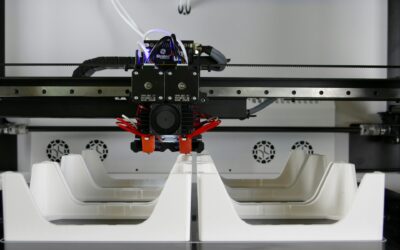
DIAMETER
In the DIAMETER project, the physical-experimental results of the 3D metal additive manufacturing processes will be contrasted with computational simulations, with the aim of predicting the behaviour of the parts under different modifications of the process.
CLEANPORTS
CARTIF Projects CLEANPORTSResearch of intelligent and sustainable nay solutions for the automation of logistics and advanced intermodal processes from por to last mile.DescriptionThe main objective of the project is to improve logistics processes for the complete...

INPERSO
INPERSO is a holistic project of deep renovation of buildings that address all its life cycle and combines industrialization and customization. INPERSO will integrate new technological components that joint with pre-manufacturing advantages, preintegration and 3D printing robotic will reduce drastically time and costs of the construction.

SESAMO
Design, configure, programme and adapt a system that facilitates and assists the user in their relationship with the cabinet doors.
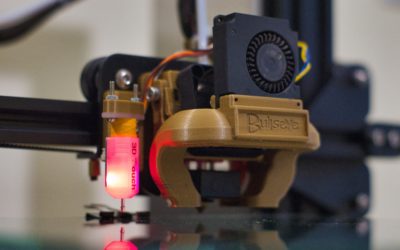
Portable 3DPrinter
Portable 3D printer looks for the innovation in construction processes promoting the industrialization and customization of construction that 3D printing technologies provide.

Metabuilding Labs
To reach the COP21 goal of nearly-zero energy, zero emission buildings MBLabs Labs strives to unleash the innovation potential of the SMEs of the Construction sector by lowering the entry barriers to test innovative solutions in a network of testing facilities in RTOs and Living Labs in 13 countries

I-NERGY
The main objective of I-NERGY is to deliver an energy specific open modular frameork for supporting AI-on-demand in the energy sector.
I-NERGY contributes significantly to achieve a techno-economic optimal mangement of the EPES (Electric Power & Energy Services)

LIFE HUELLAS
LIFE-HUELLAS project looks for the enviroonmntal assessment of the life cycle of the rail transport to correctly assess its environmneta impact.
SORTI
The objective of the SORTI project is to develop optical systems based tools and new technologies to properly identifying, monitoring and managing of structural risks in buildings.

REZBUILD
The main objective of the REZBUILD project is to create a collaborative rehabilitation ecosystem, integrating innovative technologies, and focusing on the existing housing stock. The aim is to increase the annual rate of building renovation from the current 1% to try to reach 2.5%.

REPARA 2.0
REPARA 2.0 aims to develop new technologies and methodologies that support infrastructure management and allow the rehabilitation and conservation of any type of road at a lower economic and environmental cost.

SALUS
SALUS project appears due to the lack of techniques able to detect geomembrane damages before these cause the rupture, and therefore, the environmental pollution
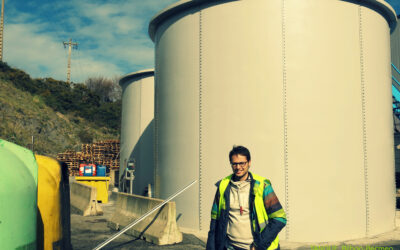
WTANK
development of a new tank of more than 2000m3 by means of a new production process called ‘flex moulding’ and materialised with fibreglass reinforced polymeric composite panels (FRP) for application in the wastewater treatment sector.

REHABCAR
El proyecto REHABCAR (REHABilitación de CARreteras y autopistas) desarrolló nuevas herramientas para la transformación de las carreteras y autovías existentes en infraestructuras económicamente sostenibles y de alta calidad para prolongar su vida útil y adaptarlas a las nuevas necesidades del tráfico.