


Strategic Missions
PROGRAMMES R&D

PROGRAMMES R&D
Strategic Missions
Description
It is a program of aid to cooperative R&D projects (fundamentally, Industrial Research) of great dimension and strategic nature aimed at solving concrete and relevant challenges for Spanish society.
For each of the five proposed “Science and Innovation Missions” there are three or four specific areas for improvement that limit the proposed global challenge.
The projects must have objectives aimed at solving one or more of these areas for improvement, and additional complementary objectives may be proposed, provided they are consistent with the selected mission.
The company must establish three quantitative indicators that reflect the general results of the project objectives. The degree of compliance with these three indicators will modulate the amount of aid finally received.
The following direct costs of execution are admitted: personnel costs, instrumental costs and inventory material, costs of contractual research, technical knowledge and patents acquired at market prices, general expenses and additional operating expenses that derive directly from the project and expenses of the auditor’s report.
| Grandes empresas | PYMEs | |
| CALL | MAX. 60M€ | MIN 10M€ |
| CONSORTIUM COMPOSITION | Leading partners: large Company, at least 1 SME | Leading a médium size Company, only SMEs eligible |
| CONSORTIUM SIZE | 3-8 (2 autonomous) | 3-6 (2 autonomous) |
| BUDGET | MIN 5M€ – MAX 10M€ | MIN 1,5M€ – MAX 3 M€ |
| ALLOCATION | LAST ANNUITY >= 20% | LAST ANNUITY >= 20% |
| SUBCONT ORG.INV | >=20% | >=15% |
| WEIGTH OF THE ACTIVITIES | IND. RESEARCH >= 85% | IND. RESEARCH >= 60% |
| DURATION | 3 or 4 YEARS | 2 or 3 YEARS |
| EJECUCIÓN (fecha fin) | 2020,2021, 2022 and/or 2023 (31 Dec) | 2020,2021 and/or 2022 (31 Dec) |
CARTIF participation
In February 2020 the first call of the call is launched with the intention of replicating it every two years.
The Center, thanks to the extensive experience gained in R&D, has the capacity to tackle the missions, especially the objectives included in the first four missions: clean energy, intelligent mobility, sustainable agri-food and new industry.
Program summary sheet
Summary file in PDF format:
DownloadThematic blocks:
The projects supported with “CDTI Missions” must be multidisciplinary, accommodate different technologies and sectors, and incorporate the latest scientific-technical trends and challenges.
The challenges posed by the Program are embodied, under the cross-cutting umbrella of the fight against climate change and sustainability, in five areas of development or “CDTI Missions” proposed by the CDTI:
Safe, efficient and clean energy for the 21st century
Short description:
Promote the decarbonisation of the Spanish economy to drastically reduce the emission of polluting gases (C02, N02, etc.), as well as the energy dependence on fossil fuels in Spain by investing in R + D in renewable and sustainable energy.
Areas for improvement
- Technological bases (pilot validated in the laboratory) to significantly reduce the cost of generating electrical energy from renewable sources.
- Technological bases (laboratory validated pilot) to significantly reduce the cost of stationary energy storage from renewable sources, regardless of the storage vector used.
- Technologies for the integration of renewables through the development of a more efficient, flexible and intelligent energy network, which allows better management of demand peaks through intelligent systems, as well as better management and integration of prosumers in the networks.
Smart and sustainable mobility
Short description:
Facilitate the evolution and transformation of the transport sector in a broad sense based on sustainability, decarbonisation and the drastic reduction of emissions, with special attention to aspects such as autonomous mobility and electro-mobility and new integrated management systems for inter-modal transport that complement the mentioned technologies, as well as new urban or interurban mobility systems that can coexist with the traditional ones.
- Obtain a functional prototype in relevant environment (TRL 5) of autonomous vehicle (equivalent to class 3 or 4 in autonomous cars), as well as infrastructure and communication management systems for autonomous vehicle parks, regardless of the sector.
- Significant improvement in energy density and cost of energy storage systems in electric vehicles.
- Development of advanced recharging systems and infrastructures for vehicle parks of all kinds.
- Elimination or reduction of emissions from all types of vehicles and promotion of mobility models that contribute to this objective.
Promote a large sustainable and healthy agro-food sector
Short description:
Convert the Spanish agri-food sector into a source of innovation capable of facing the challenges of climate change and actively contributing to a healthy diet with less environmental impact.
- Promotion of sustainable agriculture that improves crop yields, reduces water and nutrient consumption, as well as phitosanitary.
- Development of plant varieties adapted to the challenges of climate change, and resistant to emerging pests.
- Sustainable and lower environmental impact development of functional products and ingredients that contribute to reducing the incidence and morbidity of preventable diseases with a high social impact related to diet.
Boost Spanish industry in the industrial revolution of the 21st century
Short description:
Development of advanced research in areas that enable disruptive news for the industry that have a transversal and high impact on its sustainability and generate greater competitiveness and efficiency.
- Developments for an industrial production oriented to personalization, total quality and high productivity, which adequately integrates robotic systems and human workers.
- Protection of industries that incorporate innovations based on interconnected and susceptible of attacking information systems.
- Developments for a sustainable and efficient industrial production in all the links of the chain (raw materials, intermediate products, final products and waste) that guarantee effective recycling and recovery systems for industrial waste.
Give a sustainable response to diseases and needs derived from aging
Short description:
Develop ambitious R&D initiatives that allow the Spanish health technology industry to contribute to a sustainable response to functional problems, dependency and fragility derived from the aging of Spanish society, while allowing growth, being more competitive and reinforcing the leadership position of Spanish healthcare.
- Develop diagnostic methods aimed at the early identification of diseases derived from degenerative, non-tumor processes, typical of aging, in order to be able to modify their natural history and delay the disability derived from their evolution.
- Advance in the treatment of diseases of high impact on society derived from degenerative, non-tumor processes, typical of aging, including the development of health technologies, new equipment and / or elements to support the patient that allow offering alternatives to those with options limited or non-existent therapeutics, as well as those technologies that allow reducing or delaying the degree of dependency.
- Monitoring, follow-up and management of degenerative, non-tumor processes, typical of aging and the needs of the frail elderly population, relying on ICT (digital health), with intelligent use of data.
Responsible
Irene Hompanera Velasco
Programs Department
Related projects

FERTICOVERY
FertiCovery aims to identify and analyze technologies for recycling fertilizers from secondary raw materials, promoting balanced nitrogen and phosphorus flows while enhancing soil health within ecological limits

UNITED CIRCLES
United Circles seeks to transform various types of urban waste into useful resources by applying the concept of industrial-urban symbiosis.
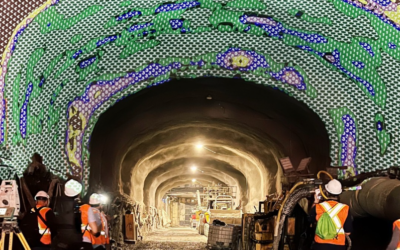
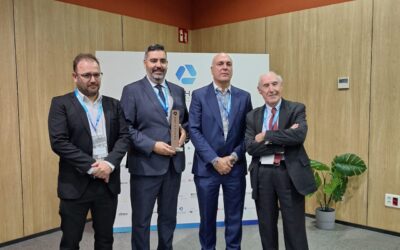
DRAGADOS and CARTIF win international recognition at the NCE Tunnelling Awards 2024 in London
The construction company DRAGADOS, with the technical collaboration of the CARTIF Technology Centre, has obtained international recognition in London by winning the prestigious New Civil Engineering Tunnelling Awards 2024 for the SOGUN system, a Guinte Robot Geometric...

AGRED
AGRED seeks to generate a series of tools aimed at facilitating the management of distribution networks and networks of sensors and equipment related to energy management.
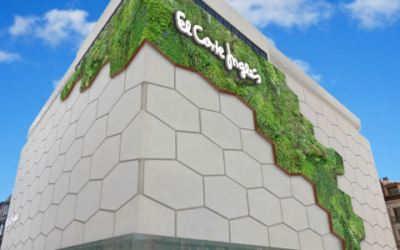
The vertical garden of the URBAN GreenUP project returnos to the centre of Valladolid
Valladolid City Council and CaixaBank have announced a collaboration agreement to install part of the vertical garden of the URBAN GreenUP project on the façade of the bank’s building, located on Regalado Street, on the corner of Teresa Gil, in Valladolid. The...
CARTIF joins the Net-Pharma Hub as the first and only technology centre of the group
CARTIF technology centre has joined the Net-Pharma Hub, the leading European ecosystem dedicated to fostering innovation, collaboration and networking in the pharmaceutical industry. This alliance reinforces CARTIF’s commitment to technological excellence and applied...
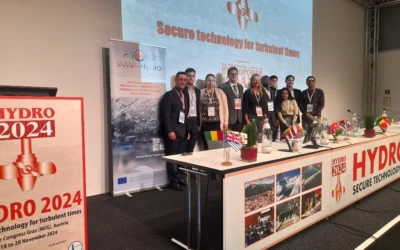
The H-HYDROFLEX Project stands out at HYDRO 2024 with its innovative proposal for hybridisation in hydroelectric power plants
CARTIF participated last week in the International Conference HYDRO 2024, one of the most important events in the field of hydropower and renewable energy, which took place in Graz (Austria). Sergio Rodríguez Carro, researcher of the Energy division, was in charge of...

CLIMRES
CLIMRES aims to foster a ‘Leadership for Climate Resilient Buildings’, by addressing the identification and systematic categorisation of buildings’ vulnerabilities and estimating their impact in the buildings’ ecosystem considering the interlinkages within the urban context.
The consortium of the LIFE NEXUS project will meet on 26 November in León where they will highlight the sustainability of the water cycle.
The LIFE NEXUS project consortium brings to an end five years of research, development and innovation with a final event to share the most outstanding advances and results in mini-hydro generation within the urban water cycle. The meeting will take place on Tuesday 26...
SIRCULAR
SIRCULAR seeks to transform the construction sector into a sustainable, low-carbon industry through decarbonisation strategies. Its main objective is to reduce carbon emissions by minimising reliance on virgin materials and exploring low-carbon alternatives, such as recycled materials.