
CARTIF Projects
PROBIO
Integrated valorisation of waste plastics and bioplastics for the sustainable production of renewable gases and bioproducts: an advanced approach to bioeconomy and biodegradability
Description
The general objective of the PROBIO project is to work on broadening the spectrum of substrates that can be treated in fermentation processes for the production of renewable gases (biohydrogen and biomethane) and biocompounds of interest (volatile fatty acids).
It is well known how much plastic waste cannot be recycled and ends up, in many cases, in landfill or in direct thermal recovery, thus losing all or most of its potential. On the other hand, in recent years, the growing production of bioplastics has led to an increase in the amount of waste which, although biodegradable, takes time to disappear from the environments where they are applied.
Objectives
-
- To evaluate the feasibility of using plastics and bioplastics as substrates in dark fermentation processes to generate biohydrogen in the gas phase and volatile fatty acids in the liquid phase.
- Develop a pre-treatment stage (thermal + enzymatic) to favour the biodegradability of the reactor input streams.
Generate a biogas stream enriched in biohydrogen. - Develop an operating methodology to maximise the presence of certain fatty acids of interest in the digested fraction.
- Make recommendations for the use of the remaining digested fraction (after fatty acid separation) based on its biodegradability.
Expected Results
- The proposed action will provide CARTIF with a very unique research and analytical capacity.
- Reduce the amount of plastics and bioplastics that end up in landfills by using them as a co-substrate in biotechnological processes for biogas and biohydrogen generation.
- Generate a biogas stream with 50% biohydrogen in its composition and a digested fraction with a fatty acid composition of interest.
R&D Line
- Design and development of biological processes for organic waste treatment: anaerobic (co-)digestion with/without pre-treatment, microalgae, dark fermentation and bio-electrochemical processes.
Subvención de Apoyo a la inversión para la mejora de las capacidades científicas y tecnológicas de los Centros Tecnológicos de la Comunidad de Castilla y León (2023)
File: 2023 CCTT 05



Total Budget: 119,800€
CARTIF Grant: 59,900€
Duración: 02/10/2023 – 31/05/2024
Co-financed with ERDF funds contributing to the Policy Objective “OP1: A more competitive and smarter Europe, promoting innovative and intelligent economic transformation and regional connectivity to information and communication technologies”.
Responsible
Dolores Hidalgo
Division of Agrifood and Processes
Networking
Other projects:

VALORA-0
VALORA-0 is focused on the valorization of waste currents of CAMPOFRÍO FOOD GROUP.

CARNIVAL
CARNIVAL aims to generate new scientific and technological knowledge to create added value for waste and by-products from the meat sector, particularly in the sheep and pig sectors.
SGA2-NZC
NetZeroCities (NZC) project’s main objective is to support cities selected by the European Commission to achieve climate neutrality by 2030, in line with the 100 Climate Neutral and Smart Cities Mission.

THUNDER
THUNDER project aims to overcome existing barriers hampering a wide adoption of DCs waste heat recovery strategies, providing an innovative, efficient and cost attractive Seasonal Thermal storage based on Thermochemical Materials
SCO2OP-TES
SCO2OP-TES focuses on the development of technologies for storing electricity in the form of heat, which is then converted back into electricity (P2H2P – power-to-heat-to-power).

HYDRA
HYDRA focuses on understanding and addressing the potential impact of widespread hydrogen use on climate, environment and society. The project assesses a scenario of high hydrogen penetration in the energy mix.

EMERGE
EMERGE aims to provide African policy makers, academics, investors and citizens with tools and knowledge to increase clean energy and sustainable resource use, reducing cultural and socio-economic gaps.

RURBANIVE
RURBANIVE will establish a novel rural/urban innovation framework, supported by technical and social innovations to enhance territorial governance and existing policy tools.

PRO-CLIMATE
Support communities to proactively adapt to climate change through social transformation and behavioural change.

PRO-COAST
Stimulate and empower local communities and civil society in general, to support restoration and maintenance of biodiversity and ecosystem services across Europe, and thus to involve them more actively in environmental governance.

Study of the use of alternative protein sources from agro-industrial by-products.
Increase the extractability of protein sources and other compounds of nutritional interest, naturally present in by-products generated in the transformation processes of the food industry, through the use of “green technologies” of pre-treatment such as extrusion
Incorporation of new equipment and processes to improve the advance digital manufacturing laboratory
Acquisition of advanced technological elements to enhance rapid prototyping services, as well as to support specific developments in the challenging processes of creating objects that are not available on the market or are costly to produce in limited quantities.
Agrigenomics and next-generation sequencing technologies
Implement advanced solutions to solve various problems linked to the agro-forestry and food sectors in Castilla y León, such as soil degradation, low agricultural productivity or the incidence of pests and diseases
Study of the mechanical behaviour of recycled composite from the aeronautical industry and wind turbine blades.
Increase knowledge of the mechanical behaviour of recycled materials from the aeronautical industry and wind turbine blades.
Efficient recovery of metals from spent EV batteries
The project focuses on the recovery of critical metals present in the cathode of spent electric vehicle battery cells, through a more environmentally sustainable process, for their future reintroduction into the value chain.
iAMP_Hydro
iAMP-Hydro aims at improving the operation of existing hydropower plants (HPP) through the development of digital solutions which will be integrated into an intelligent Asset Management Platform (iAMP)

INHERIT
The overall vision of INHERIT is to create a systematic methodology, accompanied by leading-edge Information and Communication Technologies (ICTs), such as Internet of Things (IoT), Artificial Intelligence (AI) and (big) data analytics, and associated social/behavioural practices, towards sustainable, inclusive and resource-efficient Cultural Heritage (CH) solutions.
CLEANPORTS
CARTIF Projects CLEANPORTSResearch of intelligent and sustainable nay solutions for the automation of logistics and advanced intermodal processes from por to last mile.DescriptionThe main objective of the project is to improve logistics processes for the complete...

ARISE
The ARISE project envisions a near future which aligns with Industry 5.0, prioritising, resilient, sustainable and human-centric work environments. In such a future, companies recognise that investing in industrial human-robot interaction (HRI) is essential for achieving better short- and long-term goals, rather than a cost.

SGA1-NZC
SGA1-NZC has as an objective give support to 100 cities selected to be intelligent and climate neutral by 2030.

ECOFORES
ECOFORES objective is the development of nerw bioproducts, agroecological processes and new solutions environmentally sustainable, through the application of subproducts conversion technologies.
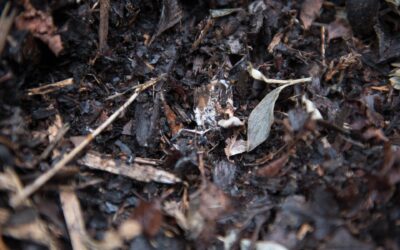
AIR-COMPOST
AIR-COMPOST general objective is to reduce the odours and Volatile Organic Compounds (VOCs) produced on the process of composting through the addition of microorganisms, additives and other compounds.
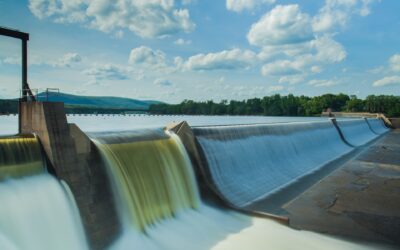
D-HYDROFLEX
D-HYFROFLEX seeks research into technological innovations in hydropower plants in search of improved efficiency and sustainability and hydropower competitiveness in modern electricity markets. The project will develop tools for the digital renovation of existing hydroelectric plants based on sensors, digital twins, artificial intelligence, hydrolyser modelling and image processing.

NATMed
NATMed project will develop, implement and validate a joint of innovative nature based solutions (NbS) on existent water infrastructures for improving the management of the water cycle and provide Ecosistemic Services and environmental, social and economic benefits.

ENPOWER
ENPOWER will design, develop and demonstrate SSH-driven methodologies, interactive and closed-loop tools, and data-driven services for energy-activated citizens and energy-secure cross-sector communities towards a citizen-centric energy system.

RURACTIVE
RURACTIVE encourage a just and sustainable transition of rural areas through intelligent solutions, lead by the community, tailor-made, based on the local and inclusive inside the multi-stakeholder rural innovation ecosystems at 12 pilot areas (Dynamos, Ds).

SMARTeeSTORY
SMARTeeSTORY will create an integrated intelligent building automation and control system to monitor and optimise the energy performance of historic non-residential buildings, according to an innovative multi-domain approach (integrating the 9 domains proposed by the ISR methodology).
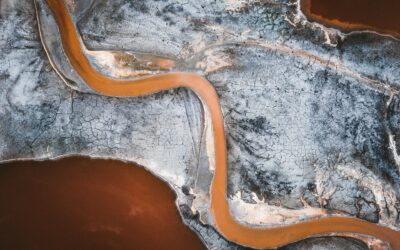
LIXIV-IA
LIXIV-IA proposes the development of solutions based on artificial intelligence (AI) and big data for the optimisation of the operation of autonomous containerised plants.

FoSSIS3
FoSSIS3 objective is to develop an operational Platform based on artificial intelligence to support decision-making in the energy planning process, through the characterization and estimation of the solar resources, and the development of analytics that support the strategy to improve the energy behavior of the building sector.
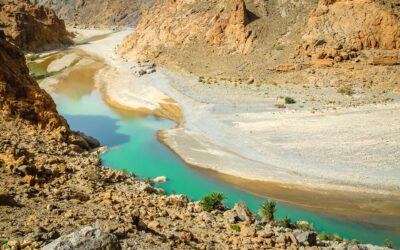
ONEPLANET
ONEPLanET aims at empowering African policy makers, research & academia, investors and citizens with the necessary tools and know-how to promote the sustainable energy transition.

BuildON
BuildOn pretends to develop a generic solution and highly replicable to offer services on buildings, facilitate the integration of their systems and technologies and with it, help to construct a new generation of smart buildings.
ENFLATE
ENFLATE applies technologies on data-driven energy and non-energy services, which it will replicate in different geographies and climates, considering different consumer needs.

DIGIBUILD
DigiBUILD overview is to provide an open, interoperable, cloud-based toolbox to transform buildings from traditional `silos´ into interoperable, smarter, digital buildings based on consistent and reliable data

THUMBS UP
THUMBS UP aims to develop and demonstrate thermal energy storage (TES) at daily (based on PCM) and weekly level (based on TCM soprtion technology) solutions to be easily integrate in EU buildings (both connected and not-connected to DHN) to increase their energy efficiency.
DEDALUS
DEDALUS will design, develop and demonstrate micro (home/flat) and macro (building and district) participatory demand response ecosystems in multiple energy vector systems and with a social and human science based approach
BATERURGIA
BATERURGIA “research into advanced recycling technologies for obtaining strategic metals from EV batteries”, aims to respond to the challenges posed by the recycling of LIBs and provide knowledge to solve the problems arising from the recovery and selective separation of critical metals to facilitate their use in the manufacture of new batteries or to replace conventional raw materials and introduce them into other production sectors as alternative raw materials.
SINNOGENES
SINNOGENES project aims to develop the Storage INNOvations (SINNO) energy toolkit, a complete framework of methodologies, tools and technologies that will enable the grid integration of innovative storage solutions beyond the state-of-the-art, while demonstrating sustainability, technical performance, lifetime, nondependency on location geogrpahical particularities and cost.

ECOVITA
Obtain a innovative technical process that allows the production of high quality ecological fertilisers based on struvite (MgNH4PO4·6H20) and ammonium sulphate ((NH4)2SO4), extracting the useful nutrients from digestates.

CRONUS
CARTIF Projects CRONUSCapture and Reuse Of biogenic gases for Negative-emission-sustainable biofUelSDescriptionIn the current context of environmental sustainability, the EU-funded CRONUS project will pave the way for bioenergy, which is key resource for the...
ELLIPSE
ELLIPSE project will address the valorisation of two heterogeneous wa
PLADEMI
PLADEMI aims to develop a tool that allows the dimensioning of energy microgrids, including and analysing social aspects as key elements in their development.

IAM COMPACT
IAM COMPACT supports the assessment of global climate goals, progress, and feasibility space, and the design of the next round of Nationally Determined Contributions (NDCs) and policy planning beyond 2030 for major emitters and non-high-income countries.
PREDICTIVO dB
PREDICTIVOdB seeks to develop an innovative solution for the maintenance of wind farms that is quick to implement and has low energy and economic requirements.

PISTIS
PISTIS brings forward a reference federated data sharing/trading and monetisation platform for secure, trusted and controlled exchange and usage of proprietary data assets and data-driven intelligence.
ASCEND
ASCEND aims to accelerate the implementation of Positive Clean Energy Districts (PCEDs) for the transformation of cities towards climate neutrality and social justice in Europe. To this end, Ascend will carry out the following measures.
CO2SMOS
CO2SMOS project propose an innovative solution to develop new technologies based on processes for the conversion of biogenic CO2 and renewable raw materials into high value-added (bio)chemical products for chemistry sector and bio-based industries.
Contribution to the substitution of fossil fuels by biofuels to help reduce global warming.
CARTIF projects Contribution to the substitution of fossil fuels by biofuels to help reduce global warmingDescriptionBiofuels offer greater energy security, lower greenhouse gas and particulate matter emissions, rural development, better vehicle performance and a...
Renewable hydrogen and natural gas production and storage
The project focuses on the development of an integrated process for the production of green hydrogen and hydrogen carrier molecules (energy carriers) for use as renewable fuels to replace current fossil fuels.